
When your doctor reviews your x-ray and says “bone on bone”, it can sound like a final verdict, yet the phrase only describes a narrowed joint space on an image. We often see people at Rosanna Physio start avoiding stairs and walks because of it, which tends to bring more stiffness, muscle weakness and pain.
The short answer is that exercise won’t harm your knee, however severe your knee osteoarthritis, and strengthening the muscles around it is one of the most strongly recommended treatments. Most people can start at home with simple moves such as sit-to-stands and step-ups, at least three times a week, as long as any pain stays mild and eases by the next day.
In This Article
- What your x-ray can’t show: See why a “bone on bone” report can’t measure your pain or how much your knee can still do.
- Whether exercise wears your knee out: Read what Australia’s national care standard says about exercise and joint damage, even with severe arthritis.
- Exercises to start at home: Get three no-equipment strength moves, plus how often to do them and how hard they should feel.
- How much pain is okay: Learn the 24-hour rule, and when to ease back if pain or swelling lingers.
- Exercise on a surgery waiting list: Find out why staying active still matters while you wait, and who decides whether you need surgery.
Told It’s ‘Bone on Bone’? What Your Knee X-Ray Can and Can’t Tell You
How a label can feed the pain
The “bone on bone” cycle, and where to break it
The label
“Bone on bone” makes the knee sound fragile and easy to damage.
The fear
Moving starts to feel risky, so walks, stairs and outings drop away.
Less movementBreak it here
The muscles around the knee weaken and the joint loses conditioning.
More pain
A deconditioned knee aches sooner, which seems to prove the label right.
↻ Then back to step 1, and the loop keeps turning.
Where to break it: step 3
Graded strengthening targets “less movement” directly. Start with easy reps, build gradually and let the 24-hour check further down this page set your pace.
Based on Australia’s Osteoarthritis of the Knee Clinical Care Standard (2024) and the University of Melbourne’s PEAK knee exercise booklet.
Osteoarthritis involves the breakdown of the cartilage covering the ends of your bones, and a knee arthritis x-ray shows the thinning articular cartilage indirectly, as joint space narrowing. What it can’t show is your pain levels, your quadriceps strength or what your knee can still do.
Australia’s Osteoarthritis of the Knee Clinical Care Standard notes a poor correlation between x-ray findings and symptoms, and says knee osteoarthritis can often be diagnosed without imaging. It also notes that nine out of 10 people with the condition can manage without joint replacement surgery, even though many who are told they’re “bone on bone” assume a new knee is inevitable.
Labels like “bone on bone knee” or “wear and tear knee” can also make people avoid activity for fear of causing damage. A knee that moves less becomes deconditioned and less used to movement, which can make it sorer and seem to confirm the label.
It’s a cycle we see a lot, which is why we focus on what can change: your x-ray won’t improve, but the strength around your knee can, with graded exercise.
Will Exercise Wear Your Knee Out Faster?
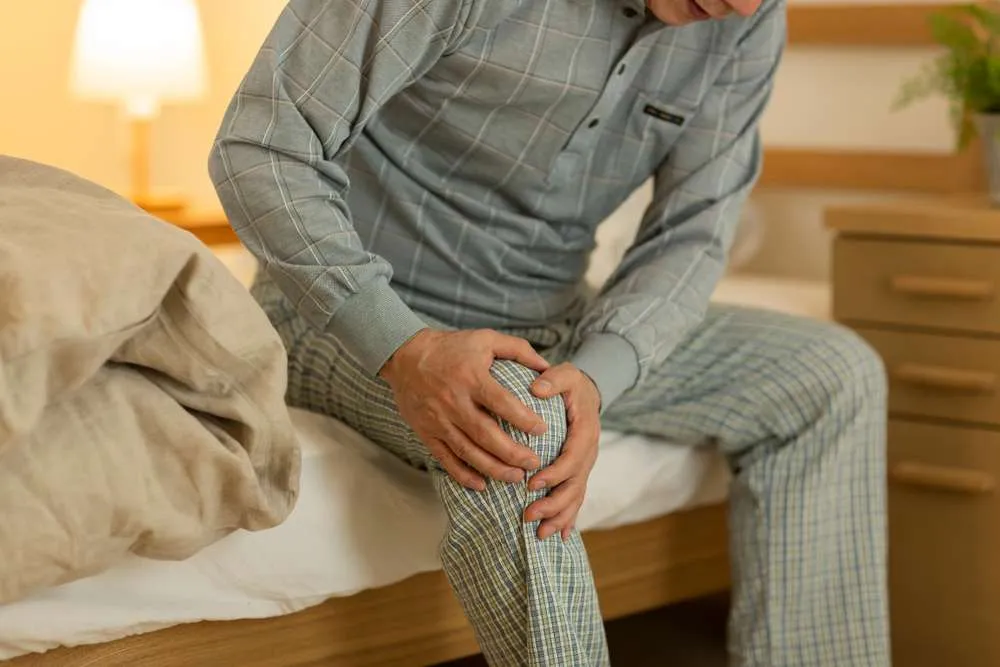
For most people, no: exercise won’t wear an arthritic knee out faster.
It’s natural to worry that every walk or squat is grinding your knee down, but Australia’s Osteoarthritis of the Knee Clinical Care Standard states that exercise is safe for your knee, even with severe knee osteoarthritis.
The Royal Australian College of General Practitioners (RACGP) goes further in its osteoarthritis guideline, strongly recommending exercise for everyone with knee osteoarthritis, regardless of age or severity. Strengthening the quadriceps, hamstrings and hip muscles is central to that, because stronger muscles help support your knee joint and can ease pain over time.
Here’s how the most common worries stack up against the evidence:
| What people often worry about | What the evidence says |
|---|---|
| Every walk wears the cartilage down further | Exercise is recommended whatever your x-ray shows, and it won’t damage the joint |
| If it hurts, I must be doing damage | Mild discomfort during exercise is common and expected |
| Resting will protect the joint | Rest alone tends to leave the muscles weaker and the knee stiffer |
| A worn knee can’t benefit from strength work | Stronger muscles help cushion, support and protect the joint |
Knee Arthritis Exercises You Can Start at Home

You don’t need a gym or special equipment to start strengthening your knee, and many useful exercises can be done in your lounge room or kitchen. Below, you’ll find gentle strength moves to begin with, ways to build up to everyday tasks like climbing stairs, and balance work to add as you get stronger.
If you’d like these exercises matched to your knee, the team at Rosanna Physio can assess you and tailor a plan.
Starting Gently: Strength Exercises for Sore Knees
When your knee already aches, strengthening it can feel like asking for trouble. Yet the muscles around the joint, especially the quadriceps (front of the thigh) and the hip muscles, share the work every time you stand up, climb stairs or get out of the car.
Building that strength is also one of the best-supported treatments you can do yourself: Australian guidelines give muscle-strengthening exercise a strong recommendation for knee osteoarthritis.
Three Exercises to Begin With
These strengthening exercises for knee arthritis need no equipment, so you can start them at home:
- Sit-to-stands: Rise from a sturdy chair without using your hands if you can, then lower yourself back down slowly and with control.
- Step-ups: Step up onto the bottom stair, leading with the affected leg, and hold the rail for balance if needed.
- Side-lying leg lifts: Lie on your side and slowly lift your top leg towards the ceiling to work the hip muscles on the outside of your thigh.
Why work the hip when it’s your knee that hurts? In a trial of people with arthritis on the inner side of the knee, hip strengthening eased symptoms even though it didn’t reduce the load through the knee.
So the relief didn’t depend on changing knee load, which is one reason we judge progress by how your knee feels and works rather than by your scan.
How Often and How Hard to Train
Aim for at least three sessions per week, working each exercise until the last few repetitions feel “hard” or “very hard”, as the RACGP’s knee exercise guide puts it. That level of effort is what builds strength.
Some discomfort is expected, and the pain section below explains how to tell normal aching from a flare.
Building Up: Exercises for Stairs and Chairs
Once the starter exercises feel manageable, make them look more like the daily tasks you find hardest.
These include climbing stairs, rising from a low couch and getting out of the car.
| Exercise | How to do it | What it builds towards |
|---|---|---|
| Sit to stand exercise | Rise from a chair without using your hands, then lower yourself slowly and with control | Getting up from the couch or car |
| Step ups for knee arthritis | Step onto a low step, leading with your sorer leg | Taking stairs with confidence |
| Slow step-downs | Standing on the step, slowly lower the heel of your other leg towards the floor | Walking downstairs steadily |
These exercises for knee arthritis at home should feel challenging, because that’s what drives strength gains in the quadriceps and surrounding muscles. If pain lingers or worsens as you progress, call us on (03) 9457 2336 so we can adjust your programme.
Adding Balance and Everyday Activity
Once the muscles around your knee are stronger, balance training is a logical next step, because every stair and kerb means briefly standing on one leg.
Simple balance exercises for knee arthritis include:
- Standing on one leg while holding the kitchen bench
- Walking heel-to-toe along a hallway
- Starting with holds of about 10 seconds and building up to 30 seconds as you feel steady, with a sturdy support always within reach
General daily movement, such as short walks, gardening or a gentle swim, complements your knee arthritis exercises at home. If you experience morning stiffness, a few minutes of easy knee bending and straightening before getting out of bed can help the joint loosen.
Pain During Exercise: How Much Is Okay and When to Ease Back
After every session
How much pain is okay? Check your knee twice
CHECK 1: TWO HOURS LATER
Has any extra pain eased, or is it still up?
CHECK 2: NEXT MORNING
Has any flare settled within about 24 hours, with no extra swelling?
● Green: carry on
Both checks pass. Mild knee pain that settles is expected, so keep going and progress gradually.
● Amber: ease back, don’t stop
Pain or swelling is still up at either check. Trim the reps, resistance or walk time for a session or two, then build again.
● Red: stop and get it checked
Locking, giving way or not being able to take weight: see a doctor urgently. A badly swollen knee, or a hot, red knee with a fever: go to an emergency department.
Sources: RACGP knee strengthening guide (two-hour check); GLA:D Australia and the University of Melbourne’s PEAK booklet (24-hour check); healthdirect (warning signs).
With knee arthritis, some pain during exercise is okay, as long as it’s mild and settles within about 24 hours without extra swelling. That aching is a normal response as the muscles and joint adapt to new load, not a sign you’re damaging your knee.
The 24-hour window matches advice from GLA:D Australia, which says very mild pain during and after a session is normal and acceptable for up to a day, and maybe a little longer when you first start.
You may also come across the RACGP’s shorter rule, which says to adjust your exercise if pain stays up for more than 2 hours after exercise or the knee is more swollen the next day. The two rules don’t clash, because both judge how your knee responds after a session rather than how it feels in the moment.
If your knee takes longer to settle, or the swelling increases, ease back rather than stopping; the University of Melbourne’s PEAK booklet notes that complete rest is unlikely to solve the problem. Try one change at a time, then build back up gradually once your knee settles:
- Reduce the number of repetitions
- Use a lighter weight or less resistance
- Shorten your walk or session time
When to Seek Medical Advice
Some symptoms aren’t a normal response to exercise and should be checked by a doctor urgently. These include:
- A knee that’s hot, red or badly swollen
- Locking of the joint
- The knee giving way
- Being unable to bear weight
If the knee is badly swollen or has changed shape, or you have a fever with a red, hot knee, healthdirect advises going to an emergency department.
Getting the Balance Right
If you’re unsure how hard to push, a physiotherapist can assess your knee and set your starting level. The team at Rosanna Physio can tailor exercises for knee arthritis to your needs and goals, then progress them as your knee responds.
Waiting for a Knee Replacement? Why Exercise Still Matters

Exercise still matters on a surgical waiting list, because your knee keeps carrying you through daily life while you wait. Australia’s Clinical Care Standard notes that guidelines recommend non-surgical management at every stage, with knee arthritis exercises forming a core part of that care.
The same Standard recommends referral to a surgeon or other specialist when symptoms keep worsening and daily life stays severely limited despite optimal non-surgical care. So exercising while you wait isn’t a detour from surgery: it’s the care meant to come first, and the Standard adds that staying active can help you function better after the operation.
If you do have a knee replacement, our guide to physio after joint replacement explains the rehab that follows. In the meantime, exercise before knee replacement, often called prehab before knee replacement, may help you:
- maintain strength in the thigh and hip muscles that support the joint
- remain more confident with walking, stairs and rising from a chair
- feel more in control of your pain
Exercise doesn’t decide whether you need surgery; that decision rests with you, your GP and your surgeon. For a tailored programme with a physio or our exercise physiologist, book online or call (03) 9457 2336.
Frequently Asked Questions
Do I Need a GP Referral to See a Physio at Rosanna Physio?
No, in most cases you don’t need a GP referral to see a physiotherapist at Rosanna Physio. Physiotherapists in Australia are first-contact practitioners, and healthdirect confirms you can book without a doctor’s referral.
A referral is generally needed only when your care is funded through a specific scheme, such as:
- Medicare rebates under a GP Chronic Condition Management Plan
- Department of Veterans’ Affairs (DVA) funded treatment
WorkSafe Victoria claims are different: with an accepted WorkSafe claim, you can see a physio for that injury without a GP referral or WorkSafe’s prior approval.
If you’re unsure which applies to you, our team can check before your first appointment.
Can I Claim Physio or Exercise Physiology Through Medicare or Private Health Insurance?
In many cases, yes. With extras cover, your private health fund may rebate part of a physiotherapy or exercise physiology session, depending on your level of cover and annual limits, so check with your fund first.
Medicare rebates need a GP Chronic Condition Management Plan and a referral from your GP. With both in place, you can claim rebates for up to five allied health visits each calendar year, shared across all allied health services.
Your GP will decide whether your condition makes you eligible.
What Does the GLA:D Programme Involve, and Could It Suit Me?
GLA:D (Good Life with osteoArthritis: Denmark) is a structured education and exercise programme for people with hip or knee osteoarthritis. It was developed in Denmark and is now delivered across Australia by certified clinicians, who are physiotherapists or exercise physiologists.
The programme combines evidence-based education with supervised exercise, and aims to reduce pain, improve joint function and help you stay active in daily life.
What Does the Programme Involve?

Rosanna Physio has a GLA:D-trained physiotherapist on the team, and every GLA:D programme follows the same core structure:
- An initial assessment, including two short tests: a 30-second chair stand and a 40-metre walk
- Two group education sessions about osteoarthritis and how to manage it
- 12 supervised group exercise sessions, twice a week, pitched at a level that suits your knee
- A follow-up assessment three months after your first one
That works out to about six weeks of exercise sessions. At the three-month follow-up, the same two tests are repeated so you can see how you’re tracking.
Is Exercise Safe for My Knee?

Yes, and current evidence doesn’t support the worry that exercise wears out the knee joint.
Australian clinical guidelines recommend exercise as a first-line treatment for knee osteoarthritis because it strengthens the muscles that support and protect the joint.
Your physiotherapist will teach you how to monitor your symptoms and adjust your exercise load, using checks like the 24-hour rule above.
Could GLA:D Suit Me?
GLA:D may suit you if you live with ongoing knee pain, stiffness or difficulty with daily activities such as walking or using stairs. An assessment will confirm whether the programme is right for your condition.
Should I Use Heat or Ice on My Arthritic Knee?
For knee osteoarthritis, heat may be worth trying, but ice is less useful for everyday care.
The RACGP guideline gives heat a cautious, conditional yes as a home strategy and suggests against routine ice packs, though the evidence on both is very low quality.
- Heat: A warm pack may help some people loosen a stiff, sore knee before exercise.
- Ice: Better suited to a fresh injury, such as a recent sprain, than to day-to-day arthritis care.
Whichever you use, wrap the pack in a towel, check your skin often and keep ice to about 20 minutes at a time. The Arthritis Movement advises avoiding heat and ice if you can’t feel hot or cold properly, which often happens with diabetes.
If your knee becomes hot, red or badly swollen, see a doctor urgently, as this may signal an infection or inflammatory flare that needs medical assessment.
Can a Knee Brace, Walking Stick or Different Shoes Help?
A walking stick can help reduce symptoms and make daily activity more manageable, but special shoes and braces have weaker evidence behind them. Each one works slightly differently:
- Walking stick: Used in the hand opposite your sore knee, a stick can reduce the load on the joint and ease pain as you move.
- Supportive footwear: Comfortable shoes make sense, but Australian guidelines suggest against footwear marketed for knee arthritis.
- Knee brace: The same guidelines suggest against unloading or realigning braces, so check with your physio before buying one.
These aids work best alongside a strengthening programme, not as a replacement for it.
Conclusion
Your x-ray might say “bone on bone”, but it doesn’t get the final say. Strong thigh and hip muscles give the joint better support, and mild aches that settle within a day are a normal part of building them.
At Rosanna Physio, our Physio-Led, Evidence-Based team helps locals from Rosanna, Heidelberg, Watsonia, Ivanhoe and surrounding suburbs build that strength safely, measuring progress rather than guessing. This article is general information rather than an individual assessment, so book online or call us on (03) 9457 2336 for a plan built around your knee.

